Muestra Internacional de Arte Multimedia
Gubatmon series - Jesed Francis Moreno - Filipinas (2025)
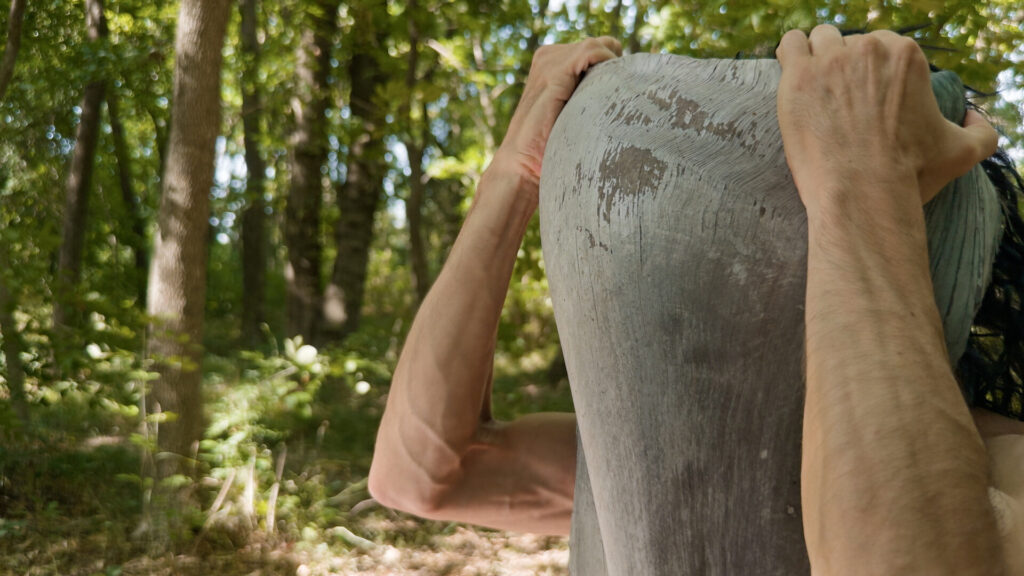
Serie multimedia inspirada en un sistema de creencias animistas que heredé de niño en Gubat, Sorsogon.
Me enseñaron que los animales del bosque no eran criaturas comunes, sino extensiones de los Engkanto, seres que protegían la tierra. Dañar a un animal
era violar el territorio e invocar una maldición. Esta creencia funcionaba como una ley no escrita antes de la colonización, regulando cómo los humanos se movían por la
naturaleza.
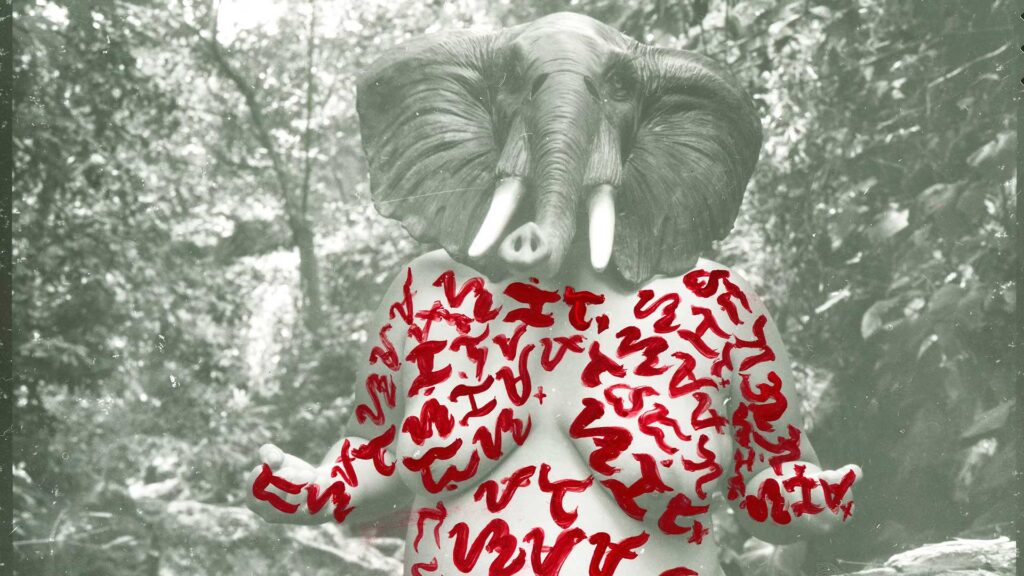
La serie representa figuras híbridas: cabezas de animales sobre cuerpos humanos. Estos cuerpos están expuestos, vulnerables y marcados. La criatura no es ni humana ni animal, sino un límite. Vigila. Protege. Castiga. La sangre y el Baybayin aparecen como marcas territoriales. Funcionan como advertencias
más que como símbolos. Utilicé mi propia sangre para inscribir estos textos, posicionando mi cuerpo como medio y lugar de creencia. El acto refleja cómo la tierra
se marcaba antiguamente: no por la propiedad, sino por las consecuencias.
La colonización intentó borrar estos sistemas tachándolos de superstición y culto al diablo. Lo que sobrevivió fueron gestos, miedos y silencios.
Gubatnon reconstruye esos fragmentos a través del cuerpo.
Esta obra no es folclore. Es una afirmación de que la naturaleza nunca fue pasiva y que la violencia, en los sistemas animistas, conlleva responsabilidad.
Multimedia series drawn from an animistic belief system I inherited as a child in Gubat, Sorsogon.
I was taught that animals in the forest were not ordinary creatures, but extensions of the Engkanto,beings who guarded the land. To harm an animal
was to violate territory and invite a curse. This belief functioned as an unwritten law before colonization, regulating how humans moved through
nature.
The series depicts hybrid figures: animal heads placed on human bodies. These bodies are exposed, vulnerable, and marked. The creature is neither
human nor animal, but a boundary. It watches. It protects. It punishes. Blood and Baybayin appear as territorial markings. They operate as warnings
rather than symbols. I used my own blood to inscribe these texts, positioning my body as both medium and site of belief. The act mirrors how land was
once marked: not through ownership, but through consequence.
Colonization attempted to erase these systems by naming them superstition and devil worship. What survived were gestures, fears, and silences.
Gubatnon reconstructs those fragments through the body.
This work is not folklore. It is an assertion that nature was never passive and that violence, in animistic systems, is bound to responsibility.
Technical specifications of the work
Year 2025
Duration: 3 minutes 52 minutes
Aspect Ratio 4:3
Video Quality full HD
With sound / Stereo
Sobre Jesed Francis Moreno
Jesed es un cineasta experimental cuya práctica se centra en procesos basados en celuloide y técnicas artesanales en este material. Procesa sus películas manualmente utilizando metodologías químicas caseras, extendiendo su trabajo a la fotografía conceptual y el arte basado en el tiempo. Su práctica se sitúa en la intersección de la imagen en movimiento, el proceso material y la quietud fotográfica.
Su forma de cine se denomina fotografía cinematográfica, un lenguaje visual construido a través de la quietud, el encuadre de duración y las tomas largas, donde la fotografía y la imagen en movimiento convergen dentro de marcos experimentales y conceptuales. Su obra aborda narrativas personales e indagaciones más amplias sobre la identidad, la espiritualidad, las ontologías especulativas, el ecocidio, el misticismo y la disolución del ego, explorando a menudo la relación entre la imagen, la memoria y los estados alterados de percepción.
Jesed Moreno es miembro del Collectif Jeune Cinéma (Francia). Sus obras han sido presentadas en el 27º Festival des Cinémas Différents et Expérimentaux de Paris (2025) y en el Landesmuseum Kunst und Kultur Oldenburg (2025).
Jesed is an experimental filmmaker whose practice centers on celluloid-based processes and artisanal celluloid practice. He hand-processes his films using DIY chemical methodologies, extending his work into conceptual photography and time-based art. His practice occupies the intersection of moving image, material process, and photographic stillness.
His form of cinema is called cinematic photography, a visual language built through stillness, durational framing, and long takes, where photography and moving images converge within experimental and conceptual frameworks. His work engages with personal narratives and broader inquiries into identity, spirituality, speculative ontologies, ecocide, mysticism, and ego dissolution, often exploring the relationship between image, memory, and altered states of perception.
Jesed Moreno is a member of Collectif Jeune Cinéma (France). His works have been presented at the 27th Festival des Cinémas Différents et Expérimentaux de Paris (2025) and the Landesmuseum Kunst und Kultur Oldenburg (2025).
Selección Oficial de Cortometrajes
Conocé las Competencias Experimental, Argentina e Internacional del nuevo FECIMU 2026.